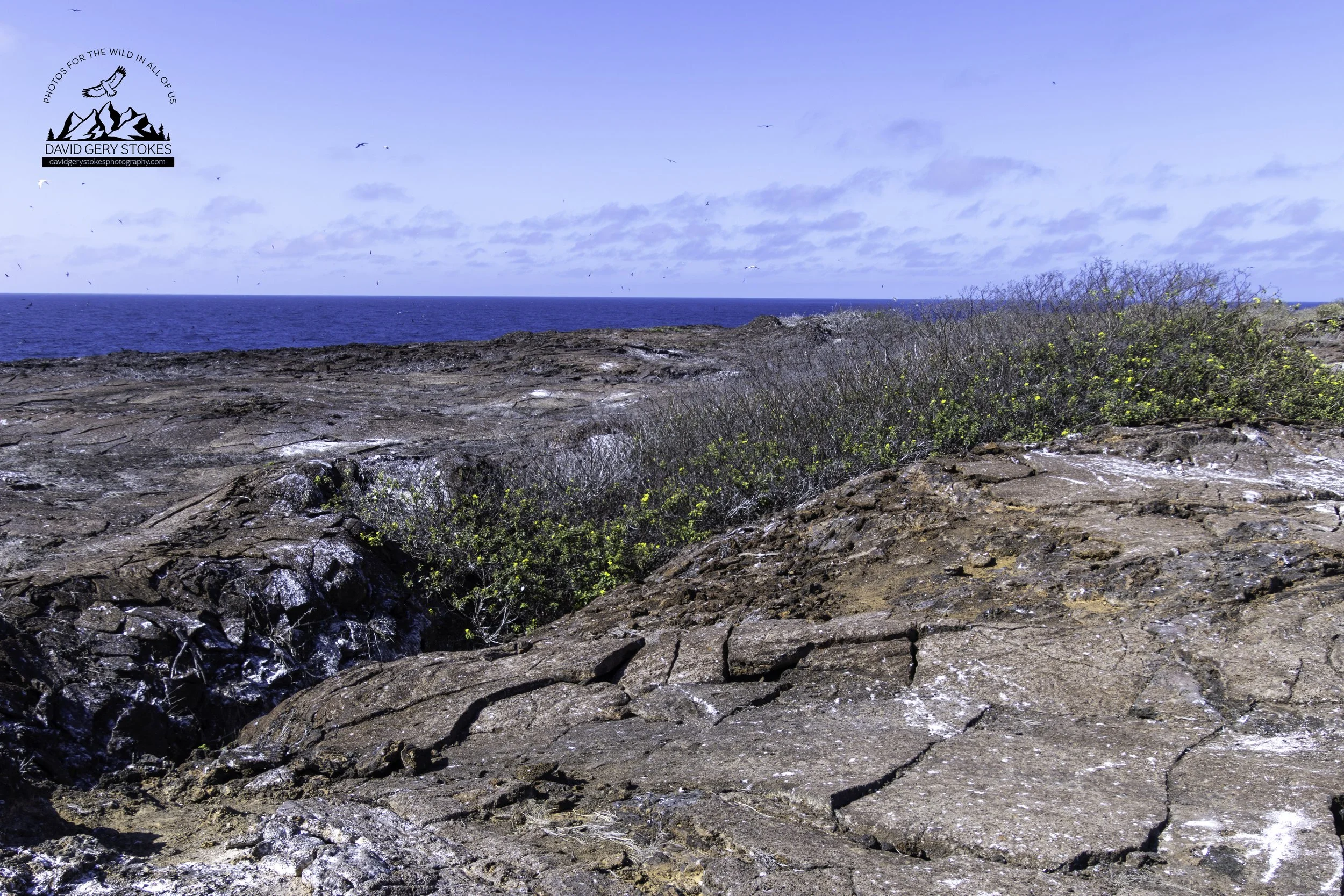
El Barranco, Genovesa Island.
El Barranco, frequently referred to as Prince Philip's Steps, is one of the most iconic visitor sites on Genovesa Island. Named after Prince Philip, who visited the Galápagos in 1964, this site is renowned for its steep, 81-foot staircase carved into volcanic rock that leads visitors from the shoreline up to a high plateau.
Landscape and Geology
The site offers a rugged, prehistoric landscape that showcases the volcanic origins of Genovesa, which is the exposed rim of a submerged caldera.
Volcanic Terrain: Visitors traverse a path of volcanic rock and fragilized lava flows. The hike leads to a plateau characterized by open lava fields and thickets of Palo Santo trees.
Panoramic Views: Reaching the top of the stairs rewards hikers with spectacular, sweeping views of Darwin Bay below and the vast, arid lava plains stretching across the island.
Accessibility: The trail is a moderate 0.9-mile (1.5 km) hike. It typically requires a dry landing on a rocky ledge, which can be challenging depending on tide conditions.
Wildlife Haven
Often called "Bird Island," Genovesa is a sanctuary for some of the archipelago's most sought-after avian species. El Barranco is a highlight for birdwatchers because it allows for intimate observation of nesting colonies.
Iconic Boobies: This is one of the premier spots to see large colonies of red-footed boobies nesting in trees and bushes, alongside Nazca boobies that nest on the ground.
Short-eared Lava Owls:El Barranco is famous for its population of short-eared owls, which have adapted to hunt during the daylight hours, specifically targeting storm petrels—a behavior unique to this island's owls.
Seabirds and Marine Life: Visitors can frequently spot storm petrels fluttering over the lava fields, as well as Galapagos doves, swallow-tailed gulls, and red-billed tropicbirds. Along the cliffs and shoreline, lucky observers may spot Galapagos fur seals resting in rock crevices.
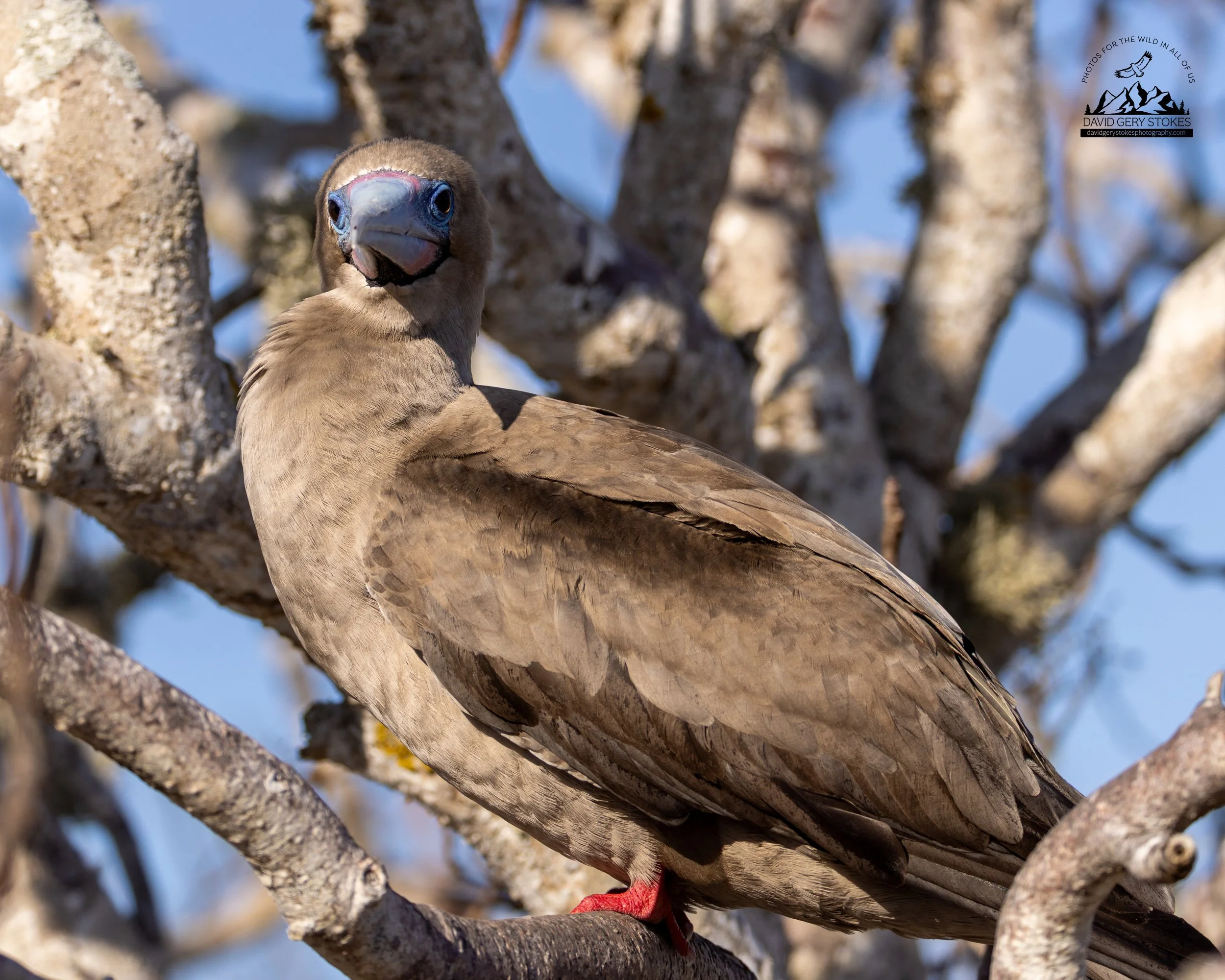
8516 Red-footed Booby
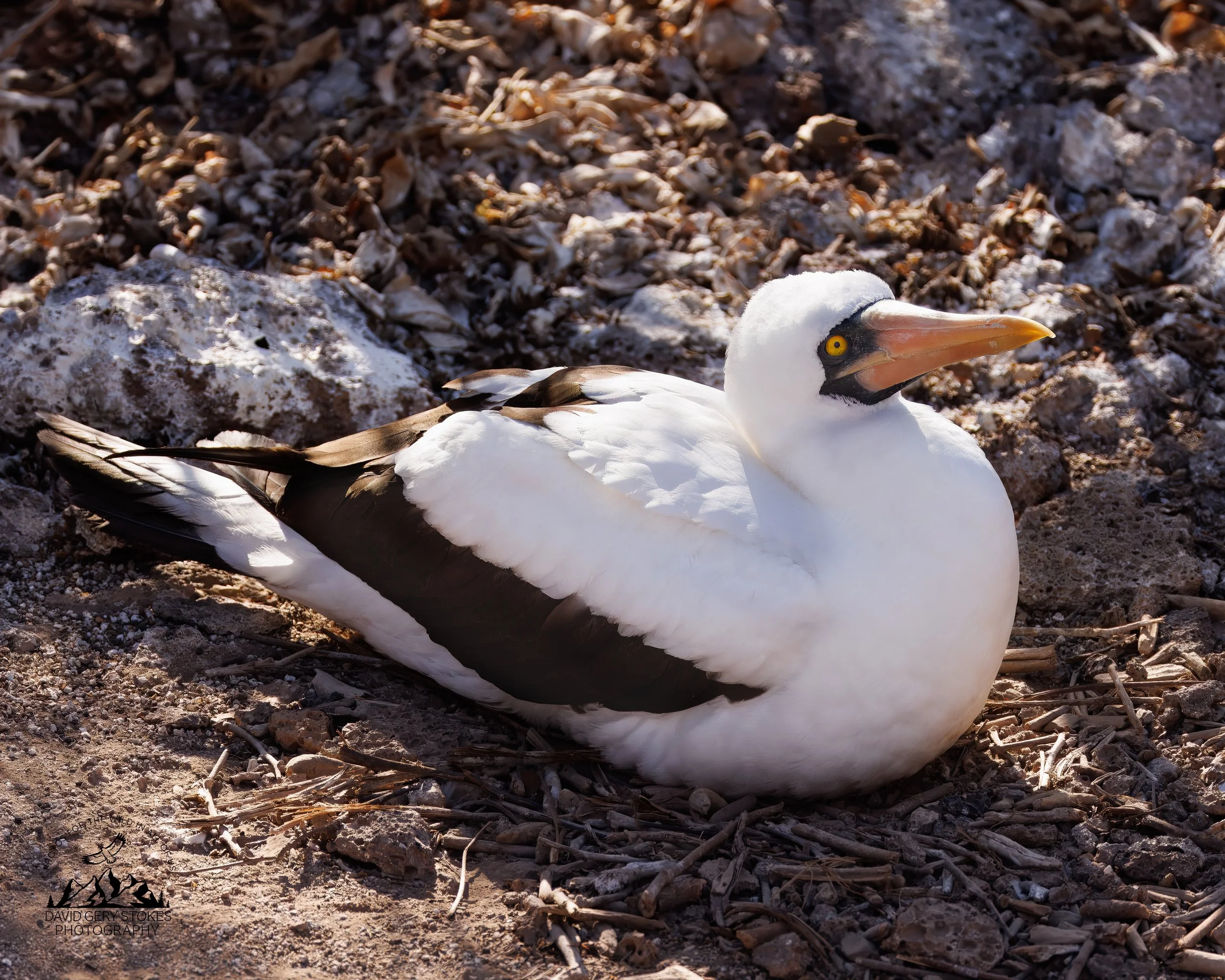
8587 Nazca Booby
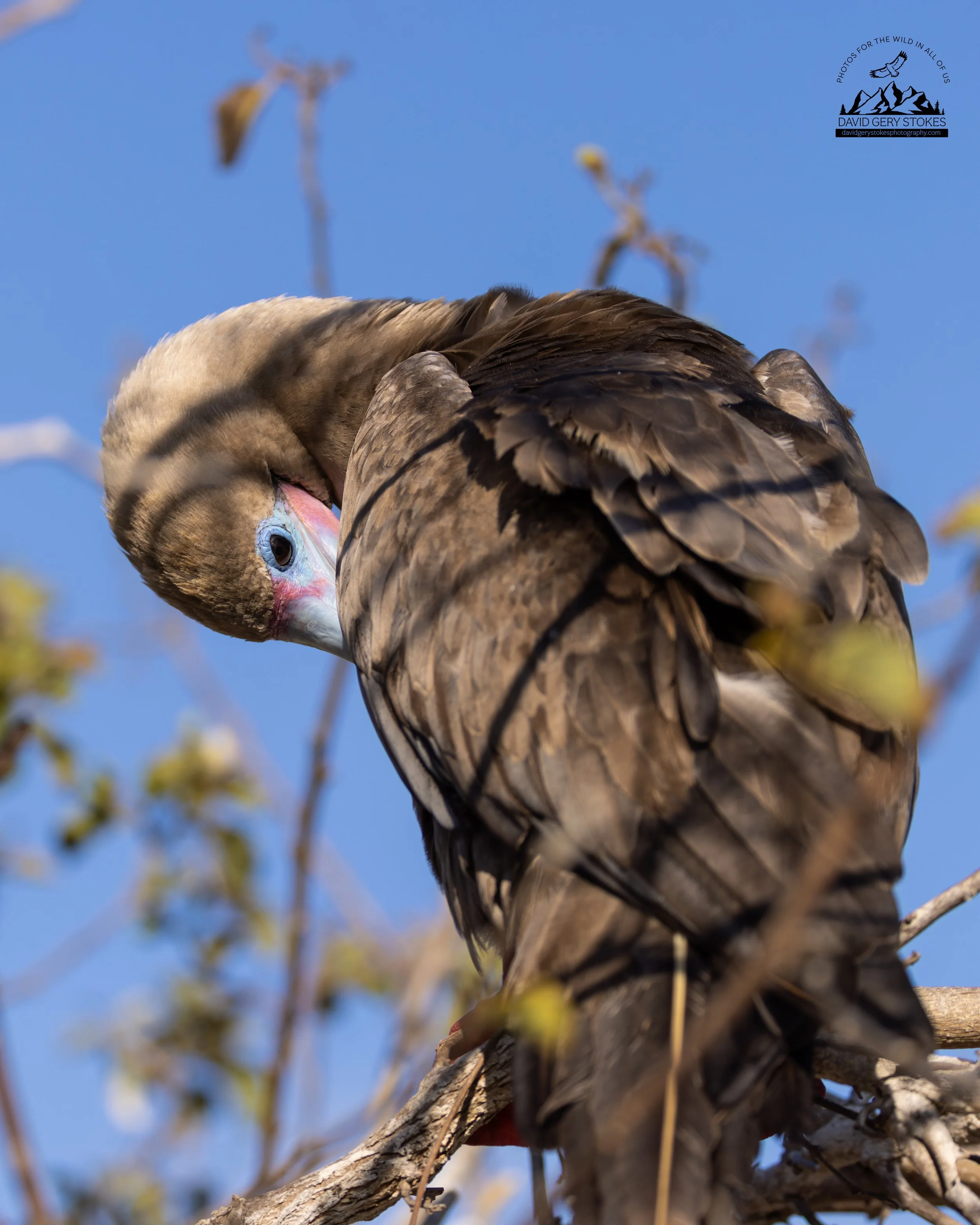
8529 Red-footed Booby
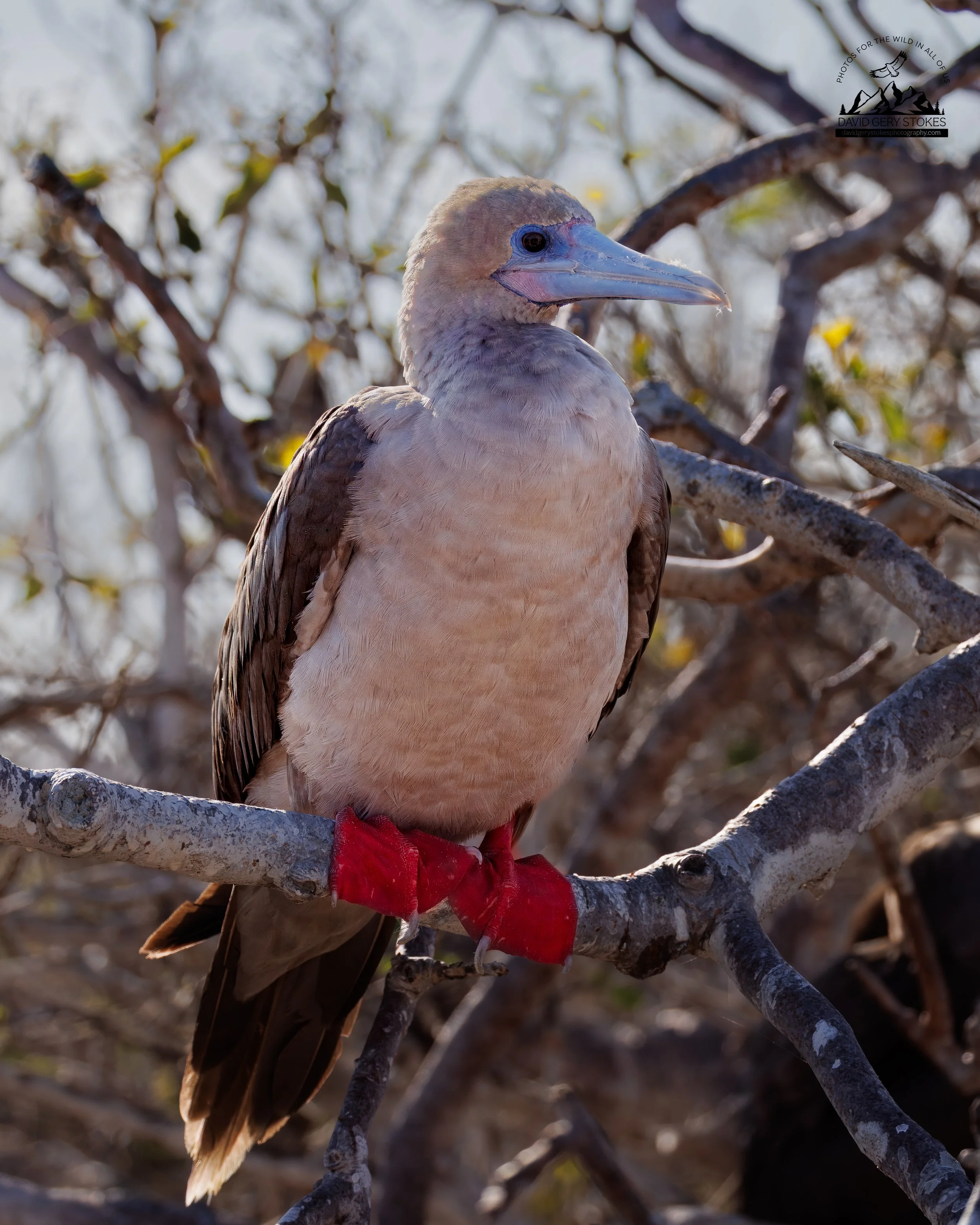
8598 Red-footed Booby
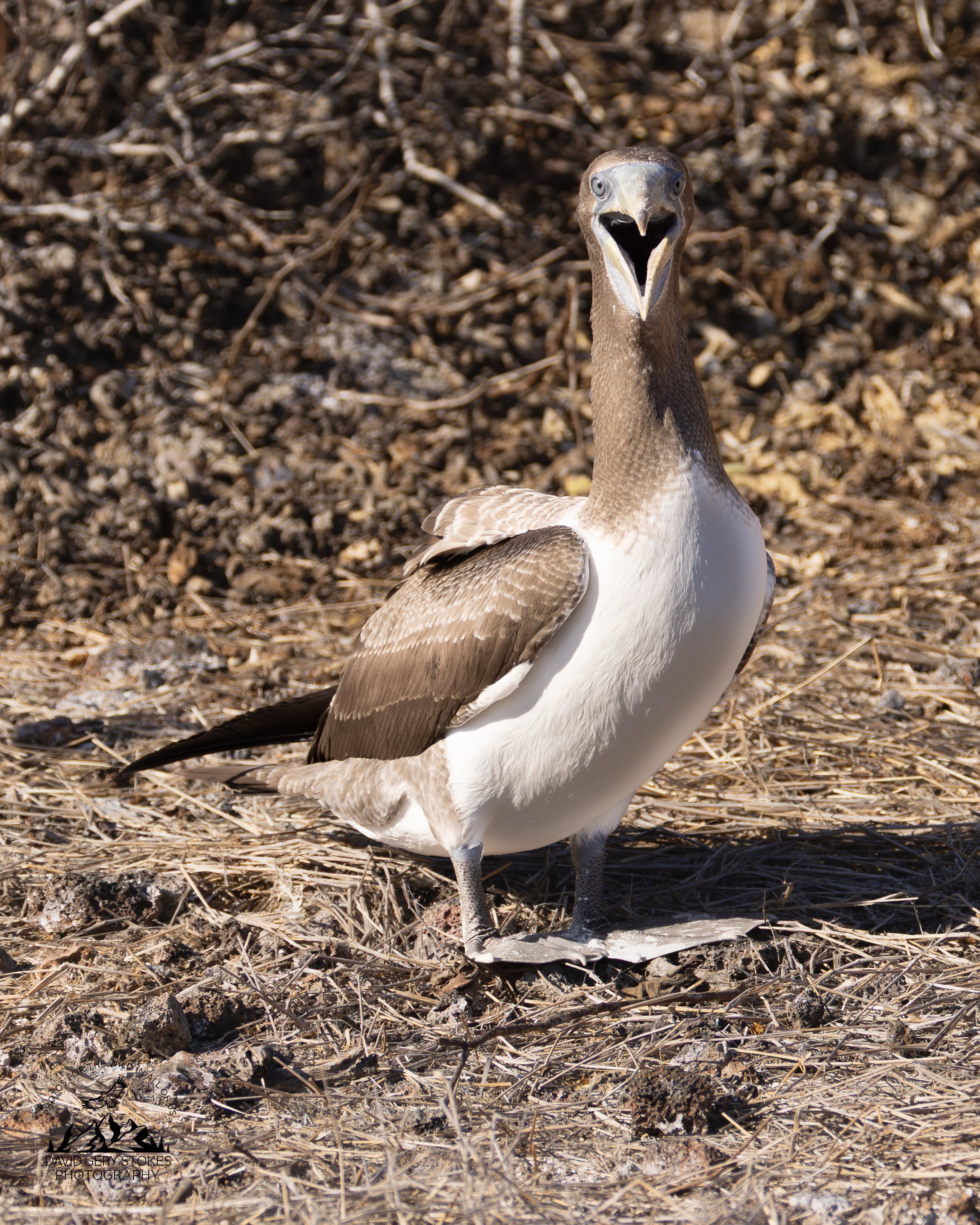
8636 Nazca Booby
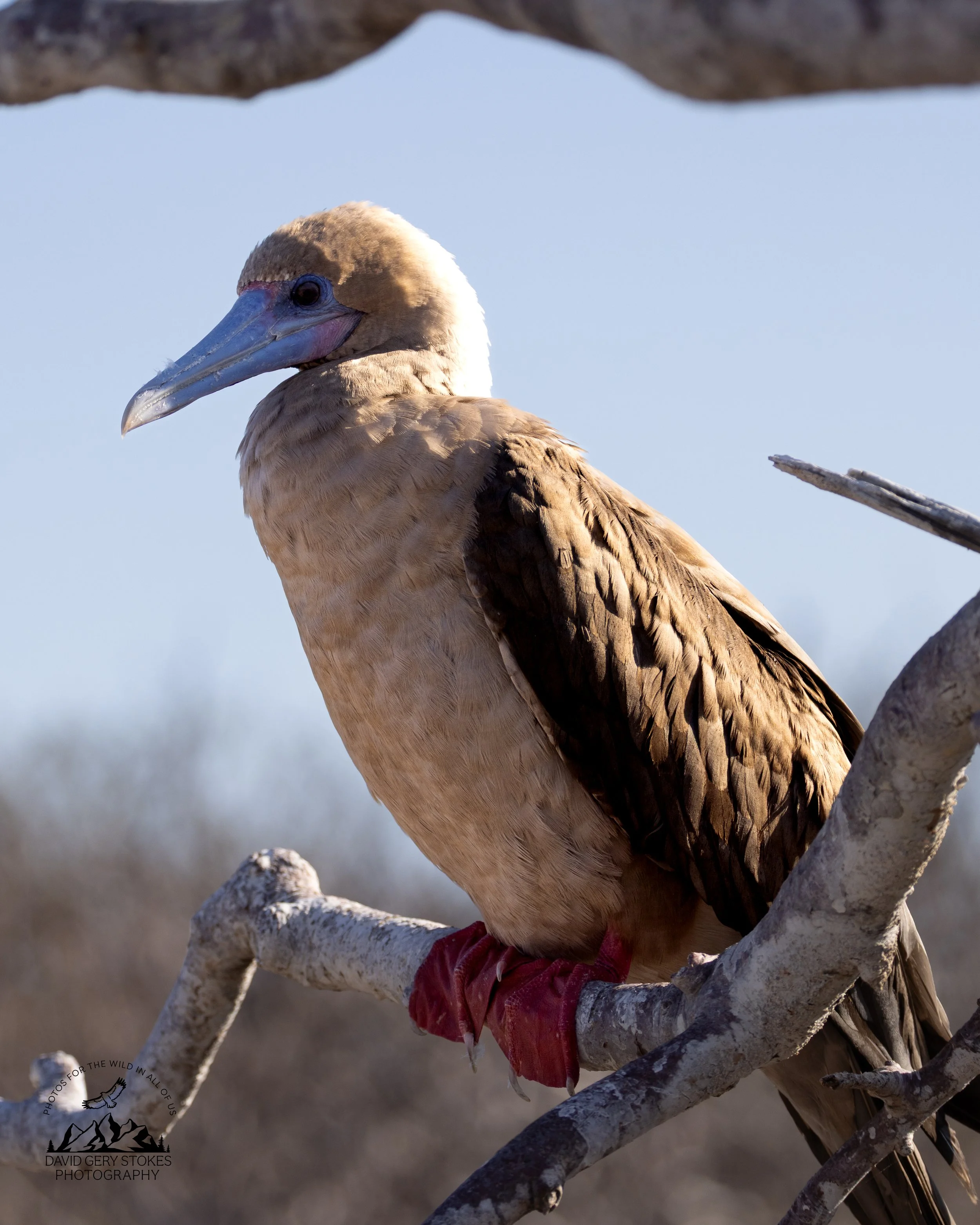
8605 Red-footed Booby
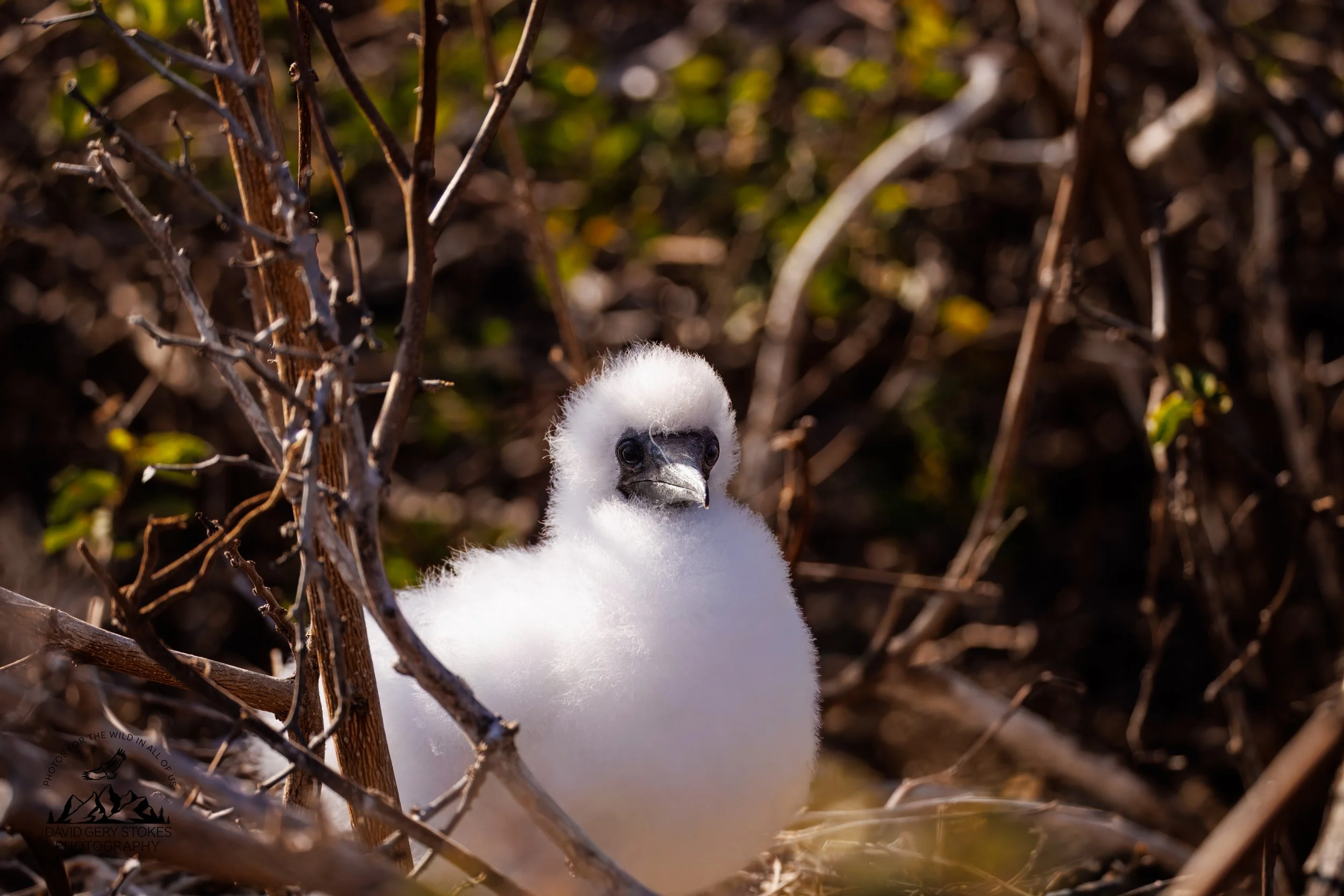
8684 Nazca Booby Chick
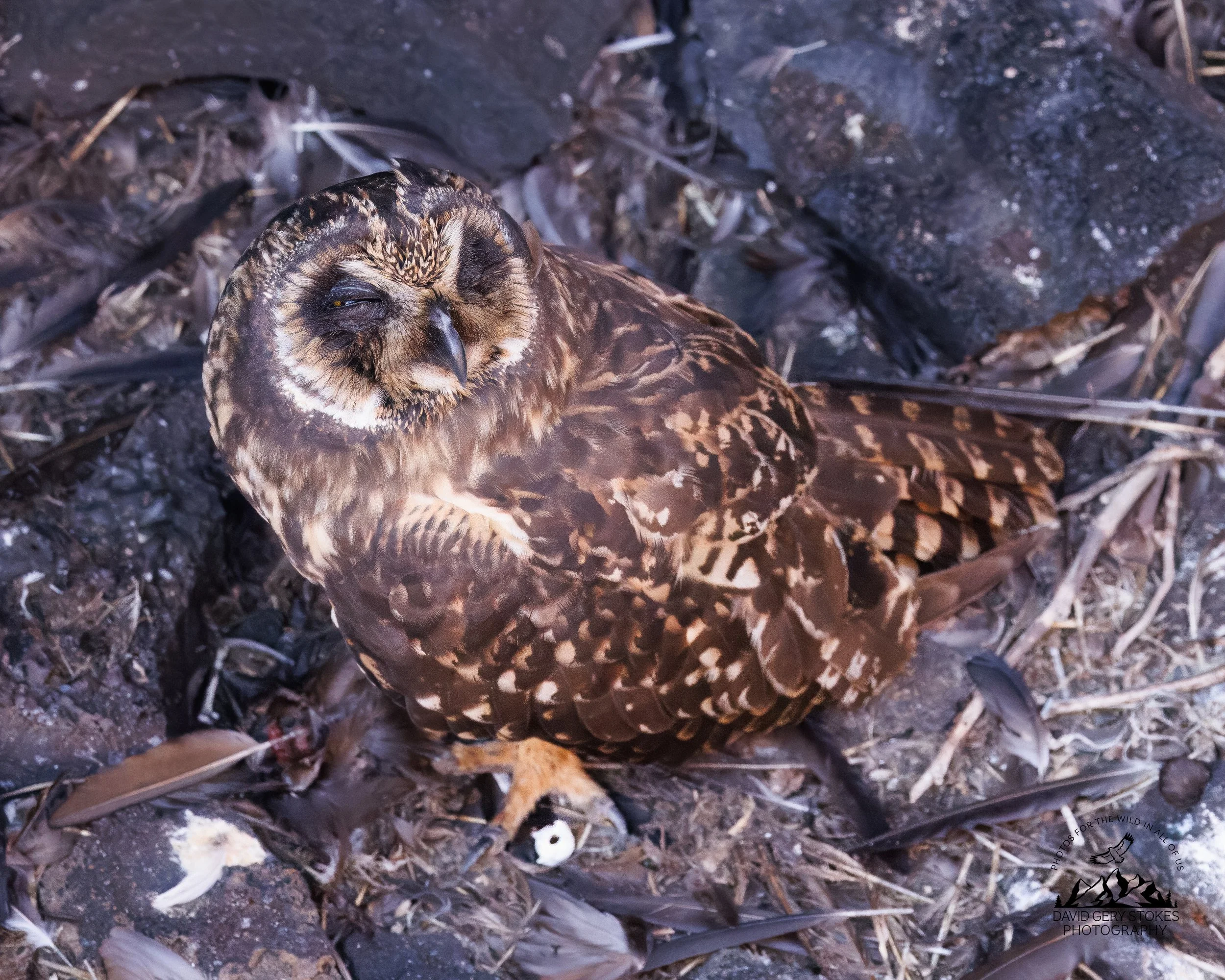
9436 Short-eared Owl
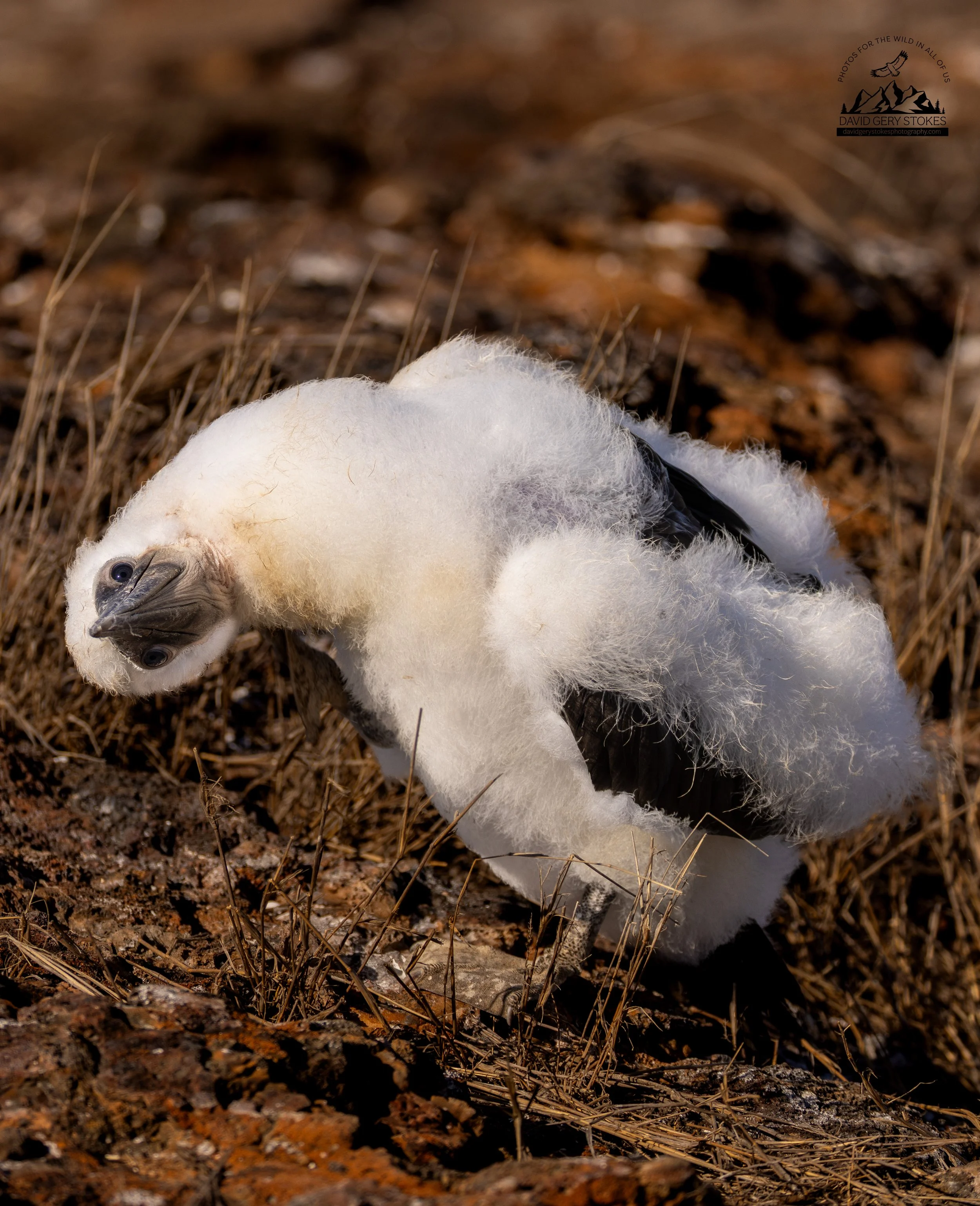
8838 Nazca Booby Chick
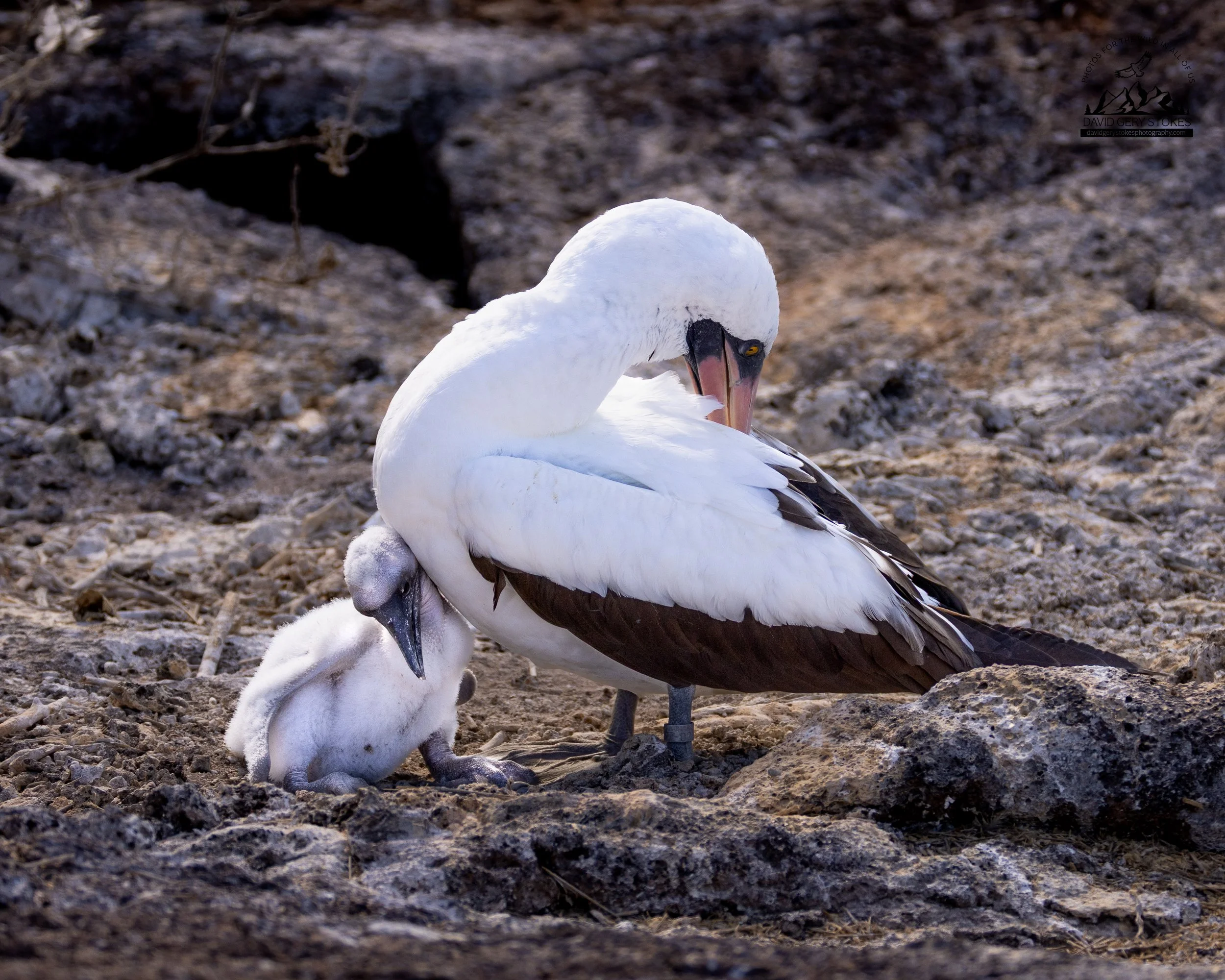
9330 Nazca Booby Mom & Chick
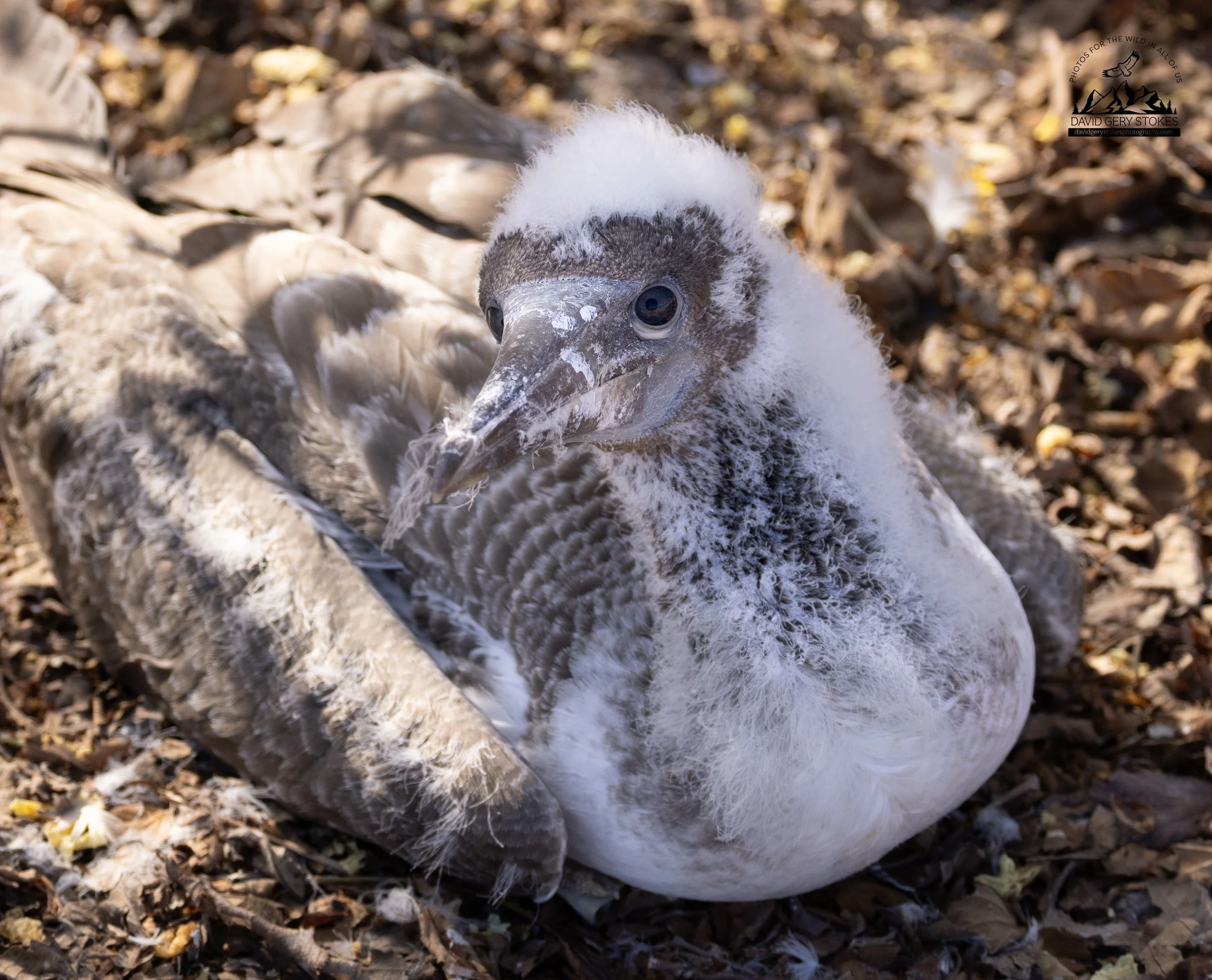
9347 Nazca Booby Chick
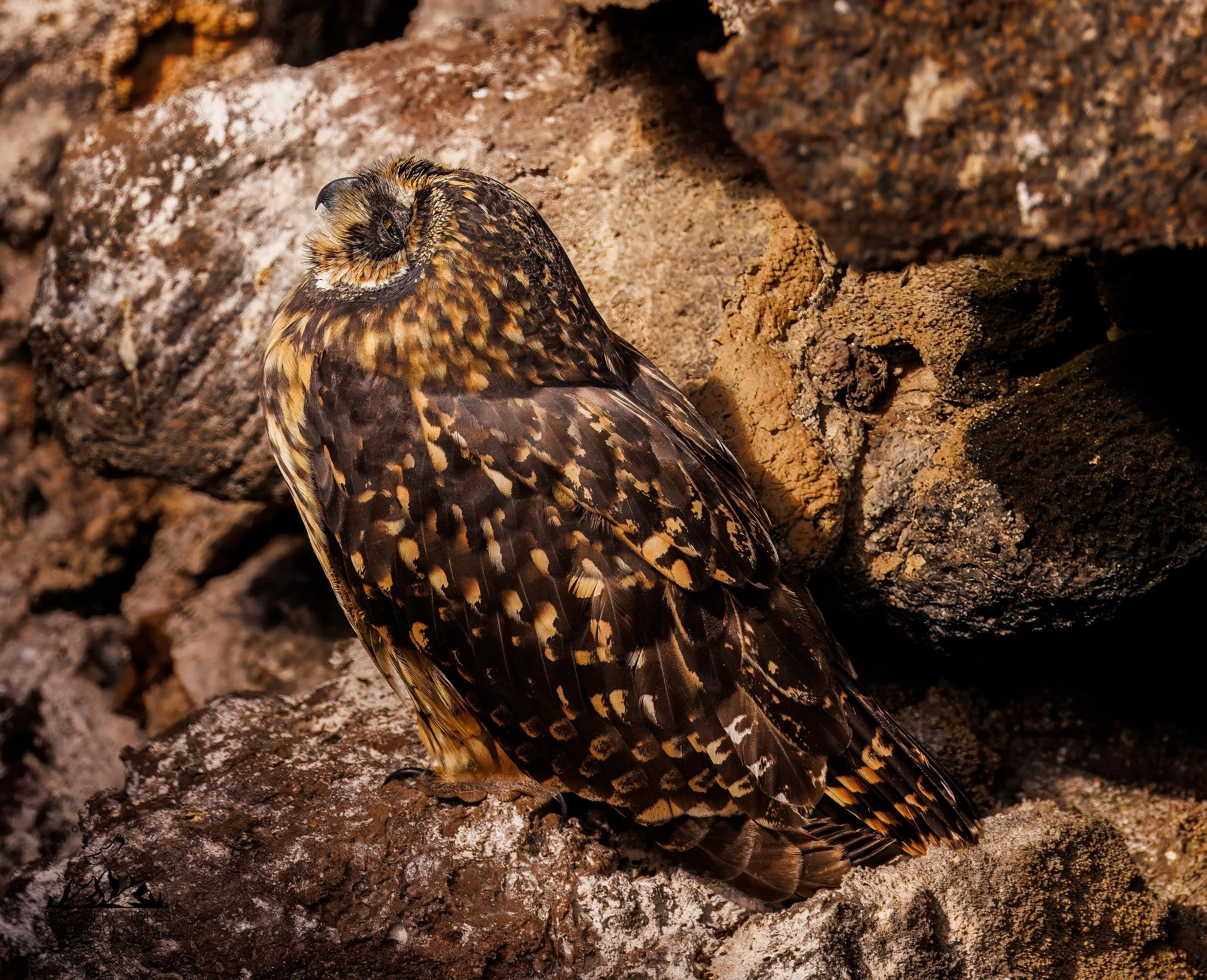
9436 Short-eared Owl
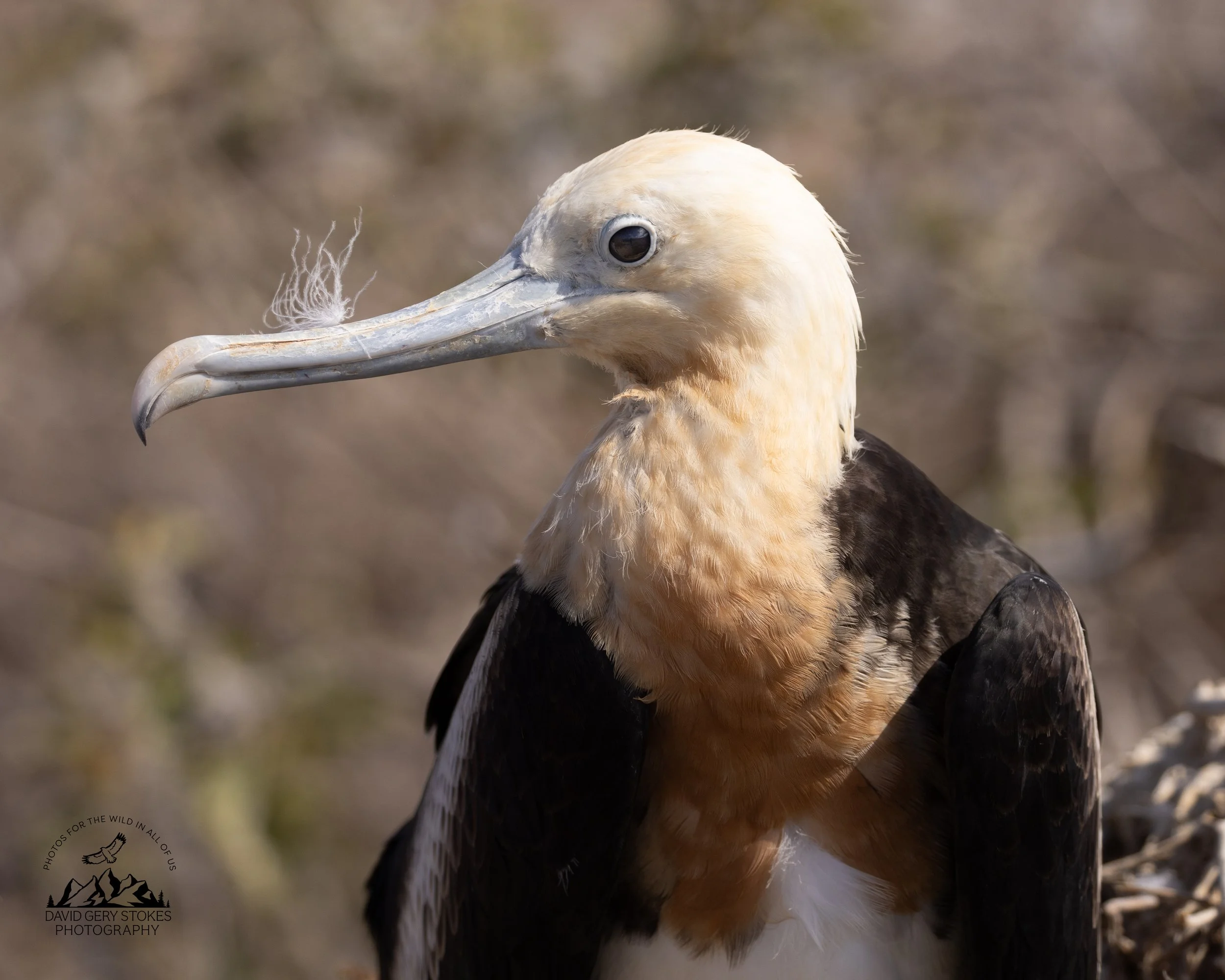
9492 Great Frigatebird
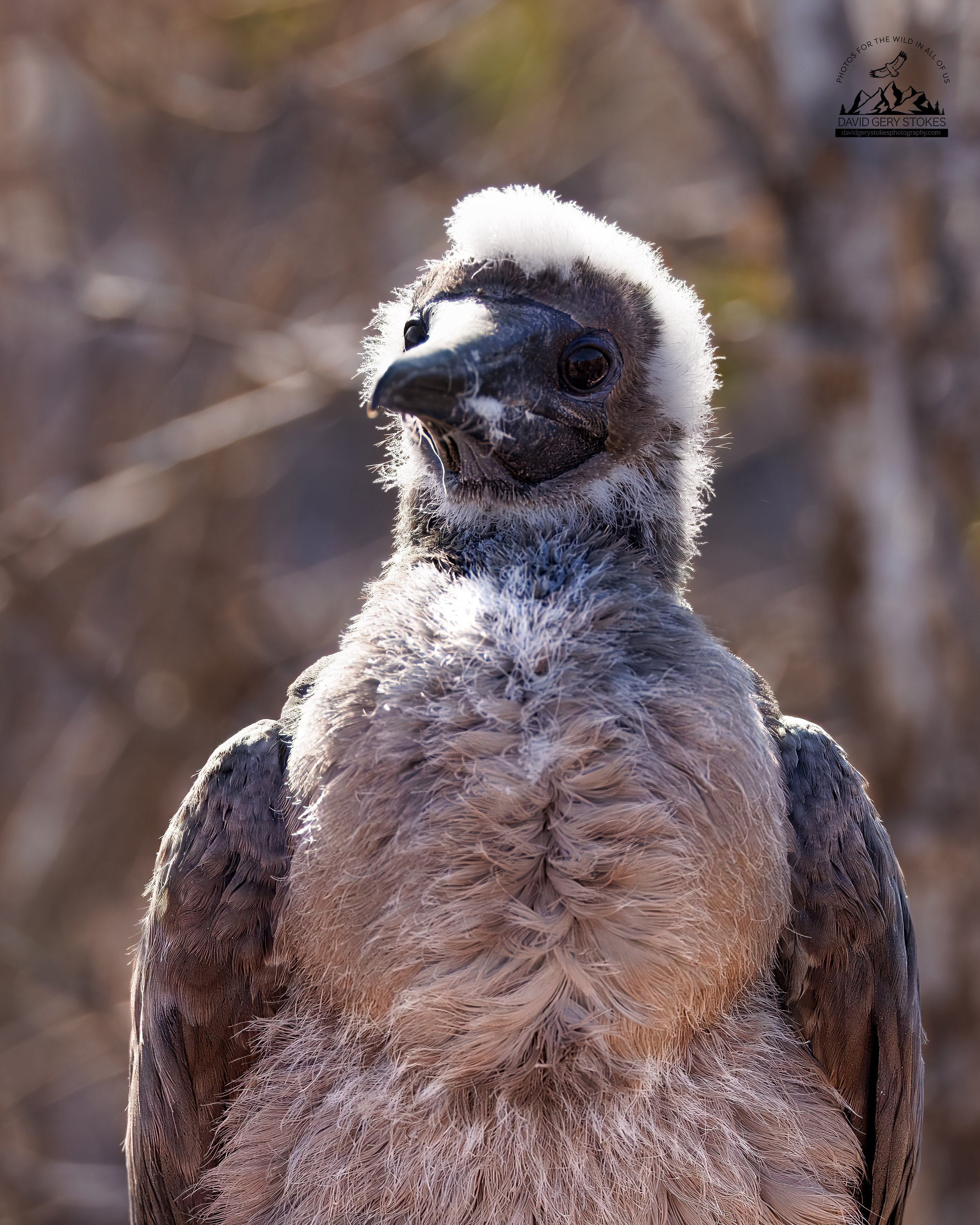
8478 Ted Knight